
You’ve been looking forward to this trip for months. You’ve told everyone about it. You’ve saved the restaurants and screenshotted the beach.
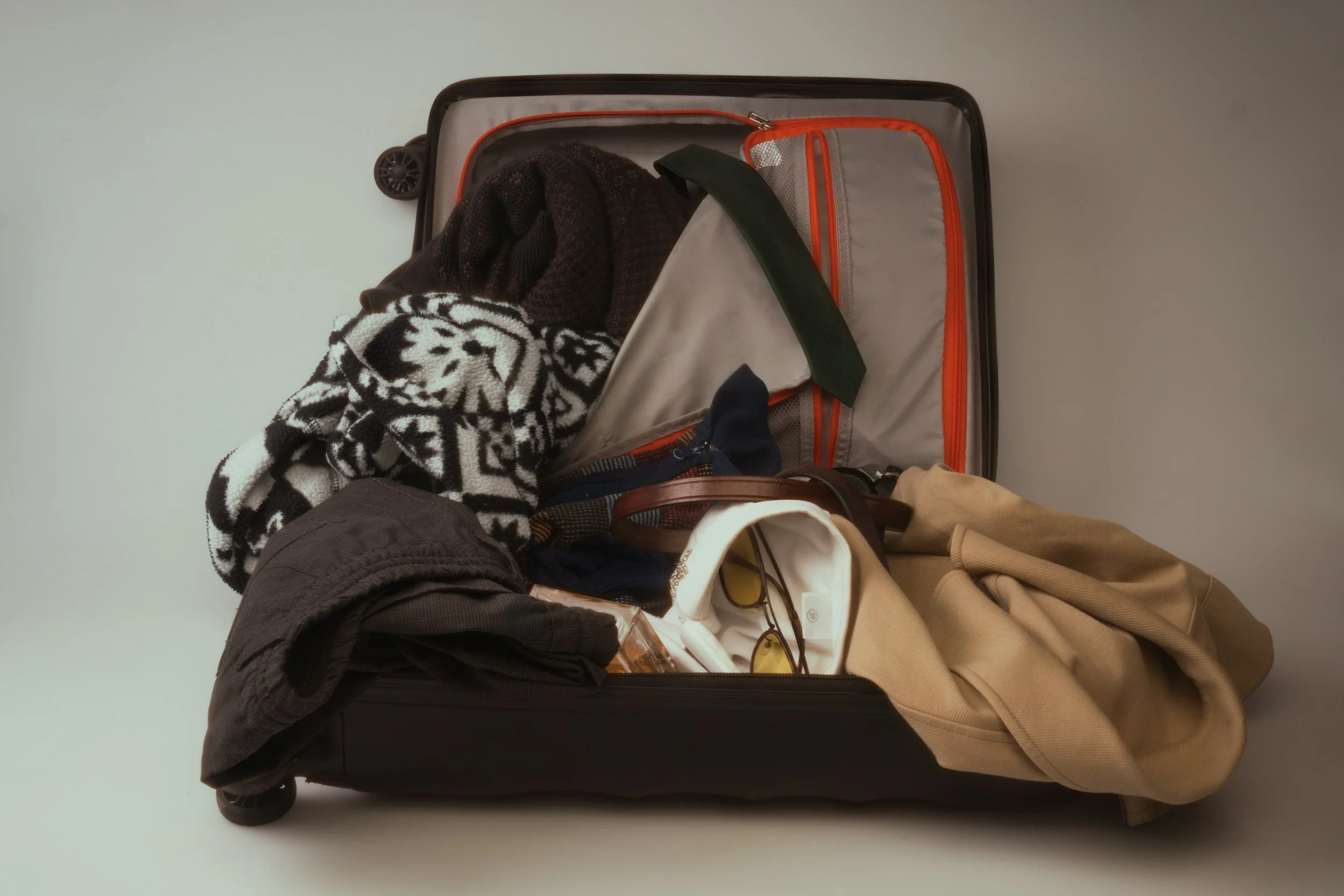
Then it’s the night before you leave. You’re on the bedroom floor surrounded by half-folded clothes. You still haven’t found your passport, and you’re googling “can you bring dry shampoo in a carry-on” at 11:47 p.m.
If you’re a woman with ADHD, and especially if you’re the one who plans everything for everyone else, this probably sounds familiar. Travel is one of the best things you can do for your brain. It’s also an executive function obstacle course. Both are true, and once you understand why, you can stop blaming yourself and start planning for the brain you actually have.
Some resources mentioned may include affiliate links, including Amazon. As an Amazon Associate, I earn from qualifying purchases, and I may also earn a small commission through other affiliate partners, at no additional cost to you. I only recommend products and books that align with evidence-informed ADHD support and relational health practices. Thanks for supporting my small business!
Table of Contents
Why Travel Is So Hard With ADHD
Before we get into strategies, I want you to understand why this happens. Once you know what’s going on in your brain, it gets a lot harder to call yourself lazy, scattered, or “bad at trips.” So let’s talk about what executive functions are and why travel pushes on every one of them at the same time.
Executive functions are the brain’s management team. They cover planning, organizing, remembering, starting tasks, keeping track of time, switching gears, and managing emotions. ADHD is, at its core, a difference in how that management team works.
At home, you’ve probably built a quiet scaffolding of routines that does a lot of the work for you without your noticing. Your keys go in the same bowl. Your meds sit next to the coffee maker. Your morning runs on autopilot.
Travel takes all of that away at once. Every routine that was holding you up is gone, and your brain has to make each decision by hand. That’s why a trip you’re excited about can still leave you fried before you’ve even left the driveway.
Planning and prioritizing
A trip is really a hundred small projects: flights, lodging, pet sitter, mail hold, packing, snacks, chargers, documents. An ADHD brain tends to see all hundred at the same volume. Booking the flight and buying travel-size sunscreen feel equally urgent, and equally overwhelming. Nothing feels more important than anything else, so either everything gets done at the last minute or the whole pile triggers ADHD paralysis (the frozen, can’t-start feeling that looks like procrastination but isn’t). So you spend an hour researching the perfect beach bag while the pet sitter still isn’t booked.
Task initiation
Even when you know exactly what needs to happen, getting started can feel like pushing a car uphill. ADHD brains get going on things that are interesting, urgent, new, or a little bit challenging, and “fill out the online check-in form” is none of those. That’s why the boring trip tasks sit there for weeks, then all get done in a panic the night before, when the urgency finally kicks in.
Working memory
Working memory is your mental sticky note, the place you hold information while you use it. With ADHD that sticky note is small and the glue is weak. “Remember to pack the phone charger” gets bumped out by the next thought within seconds. You walk into the bathroom to grab your toothbrush, see that the soap is low, and walk back out with neither. That’s why you end up buying your third airport charger, and why you double check that the passport is in your bag four times before you reach security.
Time blindness
Many people with ADHD have trouble sensing time passing and estimating how long things take. Time tends to fall into two buckets: “now” and “not now.” “We’ll leave for the airport at 6:30” quietly turns into 6:52 because packing the toiletry bag felt like a five-minute job and took twenty-five. Then add security lines, traffic, and a toddler who needs to pee. On the trip itself, that same time blindness turns “quick stop at the market” into two hours and a missed dinner reservation.
Transitions and flexibility
Switching from one task or setting to another costs ADHD brains more energy. Your brain has to stop what it’s doing, let go of it, and load something new, and each of those steps takes effort. Travel is nothing but transitions: house to car, car to airport, airport to plane, plane to rental car, rental car to a hotel room where you don’t know where the light switches are. Add a gate change or a cancelled tour, and your brain has to rebuild the whole plan on the spot. Every one of them takes a little from your tank, which is why you can feel wiped out after a day where you mostly sat in a plane seat.
Emotional dysregulation
This is the big one for so many people with ADHD. ADHD affects how fast and how big emotions show up and how long they take to settle. The part of the brain that usually says “okay, this is annoying but fixable” is slower to come online. A delayed flight or a lost reservation isn’t just annoying. It can feel like proof that you ruined everything. It’s the spilled-milk feeling, except now you’re in Terminal B and you’re also hungry. And if you’ve spent years holding it together in public, you might keep a calm face at the gate and then fall apart in the hotel bathroom later.
Sensory overload
Airports are basically a sensory obstacle course: announcements, rolling suitcases, crowds, fluorescent lights, the smell of six food courts at once. Many ADHD brains have a harder time filtering out background noise and stimulation, so all of it comes in at full volume. By the time you reach your destination, your nervous system may already be maxed out, which makes every other executive function on this list even harder to access.
Impulse control and spending
New places mean new things, and novelty is very hard for an ADHD brain to resist. The cute shop, the extra excursion, the second dessert. In the moment, the reward feels big and the bill feels far away. Tracking a budget in real time is one more executive function task on a trip already full of them, so it’s easy to come home to a credit card statement that makes your stomach drop.
Sleep and medication disruption
Time zones, early flights, and strange beds throw off sleep, and sleep is the fuel your executive functions run on. One bad night can make focus, memory, and emotional regulation noticeably harder the next day. If you take ADHD medication, the timing gets messy too. A dose that usually covers your workday might wear off right as you’re trying to find your rental car in a strange city at night.
The overfunctioning trap
If you’re the reliable one, you’re probably planning this trip for your partner, your kids, and maybe your mom too. You’re carrying everyone’s snacks and everyone’s documents and everyone’s mood. You’re the one who remembers the kids’ sunscreen, the dog’s food schedule for the sitter, and the cousin’s birthday dinner on day three. That’s a lot of invisible labor stacked on a brain that’s already working without its usual supports. Then you wonder why you need a vacation from your vacation.
If you saw yourself in more than one of these, that makes sense. They feed each other. A short night of sleep makes emotions bigger, big emotions make it harder to plan, and a shaky plan makes time blindness hit harder. The good news is it works in reverse too: support one of these and the others get a little easier.

Why Travel Is Also So Good for the ADHD Brain
If you’ve made it through that list feeling a little called out, take a breath. All of those challenges are real, and they’re only half the story. There’s a reason so many women with ADHD come home from a trip feeling more like themselves than they have in months, and it isn’t just the margaritas. It comes down to how your brain is wired to respond to new things.
Novelty is fuel for your brain
Dopamine is the brain chemical behind motivation, interest, and focus. ADHD brains have a harder time picking up dopamine signals, which is why boring tasks feel physically painful and new things feel electric. Researchers have repeatedly found that novelty-seeking is a strong pattern in ADHD. A new city, new food, a new language on the street signs: that’s a steady supply of the thing your brain is always hunting for. Lots of women with ADHD notice they feel more awake, more curious, and more like themselves on a trip than they have in months.
You get a break from your environment’s to-do list
At home, everything you look at is a reminder of something unfinished. The laundry pile. The permission slip. The junk drawer. Your nervous system is constantly scanning those cues, which is a quiet, constant source of the anxiety so many of you describe. On a trip, those cues disappear. Your brain finally gets to stop scanning, and many women feel their shoulders drop for the first time in ages.
Awe and nature help calm your nervous system
Standing in front of something huge and beautiful, like an ocean, a mountain, or an old cathedral, pulls your attention outward and gives a runaway stress response a chance to settle. For an anxious ADHD brain that lives in its own head, that’s a real relief.
Your strengths get to show up
Curiosity, spontaneity, creativity, reading a room, and staying calm in a crisis (ADHD brains are often weirdly good at emergencies) all shine when you’re traveling. You find the hidden taco stand. You talk your way into the sold-out tour. Travel is one of the few places where the world rewards the way your brain already works.
So the goal isn’t to make travel less exciting. The goal is to take the boring executive function work off your brain so it has room to enjoy the good stuff.
Practical Strategies for Traveling With ADHD
Now for the good part. None of these strategies are about trying harder or finally becoming a “together” traveler. Willpower has never been your problem. Each one is about moving work out of your head and into the world around you, so your brain doesn’t have to hold it all. Start with the one or two that hit your biggest pain points from the list above.
Organization: build your scaffolding before you go
Make one master packing list and reuse it forever. Your brain shouldn’t have to come up with a packing list from scratch every trip. Make one in your notes app, sort it by category (clothes, toiletries, tech, meds, documents), and copy it for each trip. Over time it becomes your outsourced working memory.
Give everything a home. At home your keys live in the bowl. On a trip, make a “launch pad” in every hotel room: one spot by the door where keys, wallet, sunglasses, and passport always go. Do it the second you walk in, before you unpack anything.
Pack by category, not by outfit. Tops together, bottoms together, pajamas and underwear together. When you need something, you go to one spot instead of digging through the whole suitcase, and your brain doesn’t have to remember where you put things.
Keep all your documents in one place. Passport, ID, boarding passes, reservations, and insurance cards all go in one pouch that lives in the same pocket of your bag for the whole trip.
Pack in short bursts, days ahead. Set a timer for 15 minutes and pack one category. Then stop. Spreading packing across three or four days turns one overwhelming task into several small ones and keeps you off the bedroom floor at midnight.
Task initiation: make starting easier
Make the boring tasks interesting or urgent. Your brain starts things that feel interesting, urgent, or new, so give the dull tasks one of those. Put on a podcast you only allow yourself during trip prep. Race a timer to see if you can finish online check-in before the song ends. Or set a fake deadline with a real reward: “Pet sitter booked by Friday, then I get to shop for the beach bag.”
Shrink the first step until it’s almost silly. “Plan the trip” is too big to start. “Open the airline app” is not. Once you’ve started, momentum usually carries you into the next step, and if it doesn’t, you still did one thing.
Time: work with time blindness, not against it
Plan backwards from the hard deadline. Start with “flight takes off at 9:00,” then work back: boarding at 8:20, through security by 8:00, at the airport by 7:15, leave the house by 6:30. Write the leave time down and set an alarm for it, plus one 30 minutes before.
Add a buffer to everything. Whatever you think it’ll take, add half again. If you think packing the car takes 20 minutes, plan for 30. ADHD brains underestimate time pretty consistently, so plan for that.
Make time visible. Your brain can’t feel time passing, so make it something you can see. Labeled alarms like “LEAVE FOR DINNER” or a timer on the bathroom counter while you get ready do the job your internal clock can’t.
Emotional regulation: plan for the hard moments ahead of time
Expect something to go wrong. Something always does. If you decide ahead of time that one thing will go sideways, a delay or a wrong turn or a forgotten item, it hurts less when it happens. The trip isn’t ruined. Trust that you’ll be able to handle it in the moment (you always do).
Know your early warning signs. Hunger, overstimulation, and exhaustion are the usual culprits behind travel meltdowns. If you feel your fuse getting short, check those three before you decide the whole trip is a disaster. Usually you just need a snack and a quiet corner.
Pack a regulation kit. Snacks, a water bottle, something to muffle noise, a fidget, and something comforting. Snacking and sipping aren’t bad habits. They’re how your nervous system regulates itself, so plan for them instead of fighting them.
Build in “nothing” time. Leave at least one empty block every day, ideally an hour in the afternoon. Your brain needs time to process everything new it’s taking in. An itinerary with no gaps is a burnout plan.
Name it to tame it. When a big feeling hits, say it out loud or in your head: “I’m overwhelmed because this airport is loud and I’m starving.” Putting a name on a feeling helps the thinking part of your brain come back online.
Sensory overload: turn the volume down
Lower the input before you need to. Put your headphones on as soon as you walk into the airport, not after you’re already overwhelmed. Wear sunglasses inside if the lights are harsh. It’s much easier to stay regulated than to calm down after you’ve hit your limit.
Know where the quiet spots are. Most airports have a far-end gate that’s nearly empty, a chapel or meditation room, or a family restroom you can lock for a few minutes. Look one up on the airport map before your flight so you know where to go when it all gets loud.
Land before you explore. When you get to your hotel, give yourself 20 to 30 minutes in the room with the lights low before heading out again. Your nervous system has been taking in nonstop noise and movement all day, and a short reset helps you enjoy the evening instead of just surviving it.
Medication and your body
Talk to your prescriber before you go. Ask how to time doses across time zones and whether you’ll need extra for travel days.
If you’re traveling internationally, check the medication rules for where you’re going. This is a big one that a lot of people don’t know about. Some ADHD stimulants are treated as illegal drugs in other countries. Japan, for example, bans amphetamine-based meds like Adderall even with a U.S. prescription. Check your destination’s rules, carry meds in their original labeled bottles in your carry-on, and bring a copy of your prescription. Give yourself weeks for this, not days.
Protect your sleep. Block out light and noise however you can, so a strange hotel room becomes a place your brain can actually rest. Try to get morning sunlight on your first day to help reset your body clock.
Spending: add some friction on purpose
Give yourself a fun-money budget and keep it separate. A prepaid card or a separate account just for trip extras means you don’t have to track every purchase in your head. When it’s gone, it’s gone, and you don’t come home to a scary statement.
Use a 24-hour rule for big buys. If it’s over a certain amount, take a photo and come back tomorrow. If you still want it, get it. Half the time the novelty has worn off.
Stop overfunctioning for the whole group
Hand out jobs. One person handles snacks. One handles the car. One checks everyone in. You don’t have to be the trip’s entire operating system.
Let some things be good enough. You don’t need the perfect restaurant for every meal. A gas station sandwich at a beautiful overlook still counts as a great memory.
Plan your re-entry
The post-trip crash is real. You go from all that novelty straight back to laundry and email, and your brain notices the dopamine drop. Take the day after you get home off if you can. Unpack in 15-minute bursts, and plan one small thing to look forward to that week so the drop doesn’t feel like falling off a cliff.
If coming home always knocks you flat, this is exactly what I made The ADHD Reset Sequence for. It’s a five-step workbook for getting your brain and your routines back on track after a disruption, and a trip is the most fun disruption there is.
Travel Tools That Do the Remembering for You
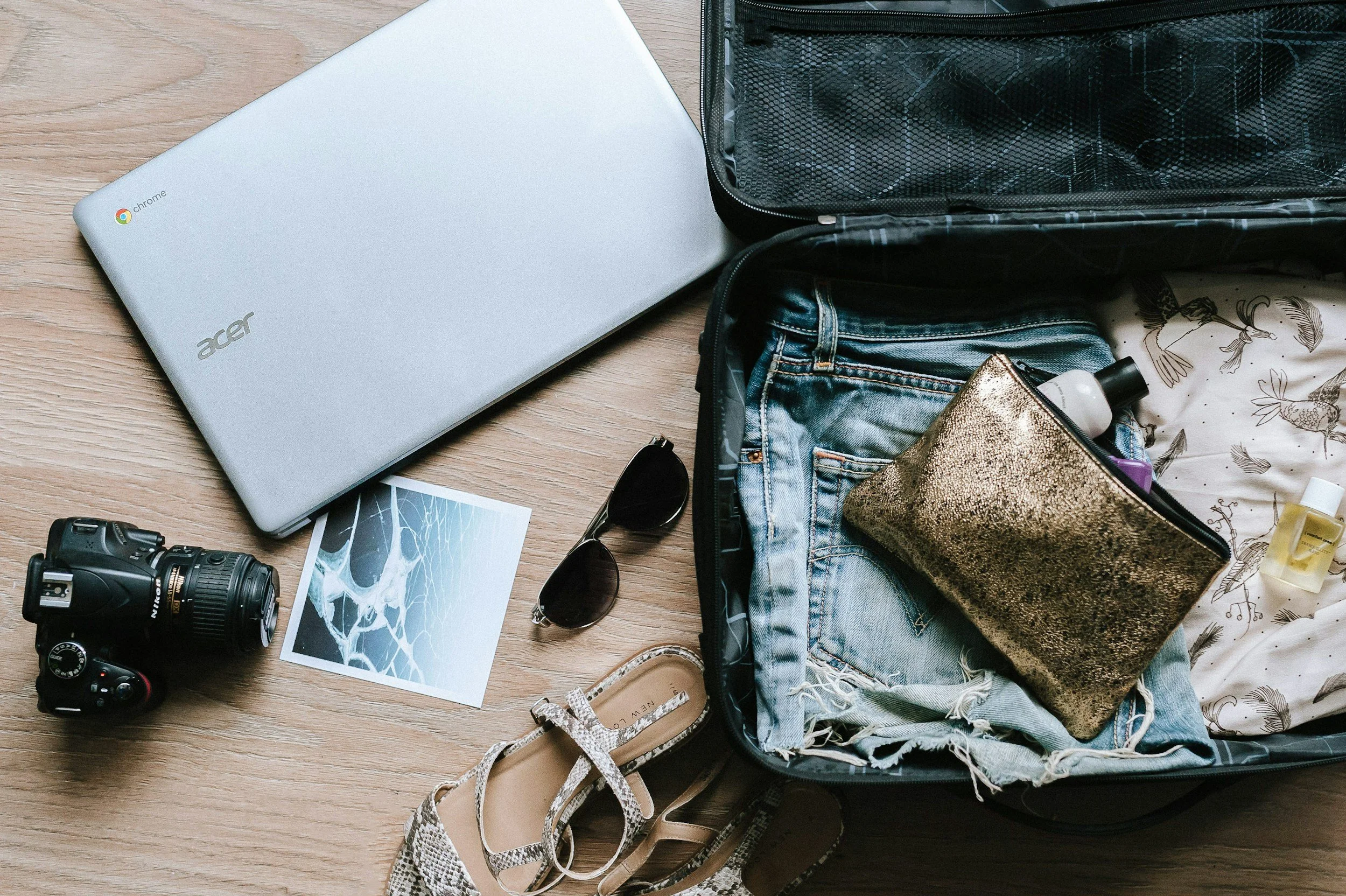
Strategies are the plan. Tools are what make the plan easier to stick to when you’re tired, rushed, and standing in a security line. Each of these takes one specific job off your brain’s plate. If you’re only going to grab one, pick the tool that matches the travel moment that usually goes sideways for you.
Packing cubes: This is the single biggest upgrade for ADHD packing. Every category gets its own cube, so you open one zipper instead of digging through your whole suitcase, and your brain doesn’t have to remember where you put things.
Loop earplugs: They turn the volume down on busy places without cutting you off completely, and they look like jewelry instead of foam.
Sony noise-cancelling headphones. Airports and planes are loud, bright, and nonstop. Good headphones can make the difference between arriving regulated and arriving fried.
LitBear sleep mask: It blocks light completely, so a strange hotel room with a glowing smoke detector can still feel like a cave.
Time Timer: A red disk shrinking in front of you while you get ready is much harder to ignore than a clock. Set it on the hotel bathroom counter and let it be your internal clock.
Fidget ring: It’s quiet and discreet, and it works perfectly for a long flight or a slow-moving line. It gives your hands and nervous system something to do without anyone noticing.
Stasher bags: These are reusable bags for your regulation kit snacks. Snacks are self-regulation, so give them a real spot in your bag.
LMNT electrolytes: Planes are dry, and it’s easy to forget to drink water when your routine is gone. A packet in your water bottle is an easy way to stay on top of it.
Travel booster seat: If you’re traveling with little ones, a portable booster takes one more thing off the overfunctioning mom’s mental list.
Apple AirTag (or Tile for Android): Put one in your suitcase, one in your wallet, and one on your keys. When your working memory drops something, and it will, your phone finds it.
Travel document organizer: Labeled slots for your passport, cards, boarding passes, and a pen. It’s a launch pad you can carry around.
Weekly AM/PM pill organizer: Morning and evening compartments let you see at a glance whether you took your meds, which helps a lot when time zones have you confused.
Portable charger: A power bank in your day bag means a dead phone never strands you without your maps, tickets, or alarms, which are basically your external brain.
Travel Strategies for Your ADHD Brain
Some of the most helpful supports for traveling with ADHD are habits that cost nothing and work right away. These are the ones I come back to most, and they work just as well for a weekend at the lake as for two weeks overseas.
Screenshots of everything. Boarding passes, confirmation numbers, and addresses, all saved to one album so you don’t need Wi-Fi or a search to find them.
Make your lock screen your itinerary. On travel days, set a screenshot of your flight time, gate, and hotel address as your lock screen. Every time you check your phone, your plan is right there.
Google Maps offline downloads for the area you’re visiting.
Body doubling for packing. FaceTime a friend or your sister while you pack. Having another person there, even on a screen, makes starting so much easier.
Photograph your suitcase and parking spot. A quick photo of your bag (inside and out) helps with a lost-luggage claim, and a photo of the parking garage sign saves you from wandering level 4 at midnight.
The 5-minute room sweep. Before you leave any room, take five minutes to scan for chargers, glasses, and anything plugged in.
Talk out loud to yourself. “Passport is in the front pocket.” Saying it out loud gives your working memory a second chance to hold onto it.
Your Brain Was Built for Adventure
If travel has always felt like it costs more for you than for everyone else, you aren’t imagining it, and you aren’t bad at this. You’ve been doing it without the scaffolding your brain needs. That forgotten charger and that airport meltdown weren’t character flaws. They were a brain doing its best without its usual supports.
The same brain that loses the passport is the one that notices the tiny bookstore down the alley, makes friends with the bartender, and remembers that trip for the rest of your life. You don’t have to choose between the parts of your ADHD that make travel hard and the parts that make it magic. They’re the same brain.
So on your next trip, start small. Pick one strategy from this post, maybe the launch pad or the backwards plan to the airport, and try it. Give your executive functions some outside support and save your energy for the good parts: the new places, the new food, and the version of you who shows up when she’s curious and awake.
For more tools that actually fit your ADHD brain, follow me on Instagram at @unmaskedadhdtherapist, or keep reading on the blog.
*The information in this article is for educational purposes only and should not replace medical advice. If you think you may have ADHD, talk with a qualified healthcare professional about a comprehensive evaluation.*

Shannon Keleher is a Licensed Clinical Social Worker (LCSW), Certified ADHD Clinical Services Provider (ADHD-CCSP), and Certified Mental Health & Nutrition Clinical Specialist (CMNCS) specializing in helping women with ADHD navigate anxiety, executive functioning challenges, and the overwhelm of high-functioning ADHD. Through evidence-based education and compassionate support, she empowers women to better understand their brains and build lives that work with them—not against them. For more research-backed insights on ADHD in women, anxiety, and executive functioning, follow her on Instagram at @unmaskedadhdtherapist or subscribe to her newsletter.